
Thanksgiving is a time to pause and reflect on, well, what we have to be thankful for. I am thankful for family, including my Native American family members, and friends. I am thankful to the readers of this blog site. Your comments are meaningful and helpful and I thank you for being here with us.
I am thankful for this wonderful, funky country we live in. It must be the best country in the world because immigrants can’t get here fast enough. We are privileged to live here and blessed to be.
The beginning of this country belongs to its Native Americans. They were here way before anyone else, of course. But, when the earliest immigrant-settlers arrived, it was the Native Americans who were instrumental in helping them begin to forge the new nation.
The Pilgrims, including some of my family, arrived in 1620 after surviving an arduous 66 days crossing the Atlantic in a leaky wooden boat. That first winter they lived on the Mayflower while building homes and storehouses at Plymouth. Half of the 102 souls that had arrived perished during that first, brutal winter. The remaining ones moved into the village they had built.
It was then, in March of 1621, that an Abenaki Native came into the village surprising everyone by speaking in English. Days later he returned with Squanto, a Pawtuxet Native American. Squanto had been taken years earlier by an English vessel and sold into slavery. He managed to escape to London and find his way home on an exploratory expedition. His English was very good. Seeing how the Pilgrims were suffering from lack of food and illness, Squanto taught them how to plant maze, harvest maple sap and catch fish. They also learned how to identify poisonous plants growing nearby so they wouldn’t accidentally eat them.
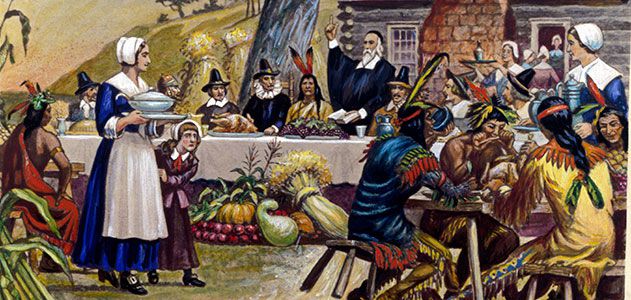
Squanto was instrumental in introducing the Pilgrims to the nearby local Natives, the Wampanoag. This friendship endured for over 50 years in peace and harmony. In the fall, when the crops planted by the Pilgrims under Squanto’s expert instruction were successfully harvested, the colony’s Governor, William Bradford, declared a time of feasting and invited their Native American allies. The Wampanoag Chief, Massasoit, was among the invited guests.
It was a 3-day celebration of gratitude by the colony for now having food and good nourishment for the coming winter. They were grateful to their Native neighbors and wished to include them to show their gratitude. They were more than included as the meals were probably prepared with Native spices and cooking methods. While the colonists went “fowling” for meat, the Wampanoag brought 5 deer with them as their contribution. The food was a little different than it is now, but this was the earliest Thanksgiving in our country.
As you eat your turkey and pumpkin’ pie and enjoy the warmth of family and friends, include the Native Americans in your thoughts, prayers, and meditations. They deserve it and right now as they defend everyone’s water, they need your support in whatever way you can give it. We wouldn’t be here without them!


 Adventures along the Umpqua River and the Oregon Coast