Thanksgiving On The Oregon Coast

For us at Umpqua River Haven, Thanksgiving is a traditional family time. We often have some or several family members visiting and we do some traditional things. This year, 2015, there were just 2 of us as the family is coming for Christmas this year. But we followed the traditions for this day and headed from URH the short distance to the coast.

Our first destination was the small burg of Lakeside, Oregon just a few miles south of Reedsport. While considered a coast town, Lakeside is located on Ten Mile Lake—one of Oregon’s many small inland, but still coastal, lakes. Lakeside Lodge serves a very traditional, plus extra goodies, Thanksgiving turkey dinner with all the trimmings. A reservation is required but we always plan ahead for it.

We arrived a bit early and they weren’t quite ready but almost. However, we ran into some Lakeside residents that are close friends and were able to visit while we waited. Soon enough we were able to get to the buffet tables and pile on the traditional cuisine and more. This was our view as we partook of our holiday fare.
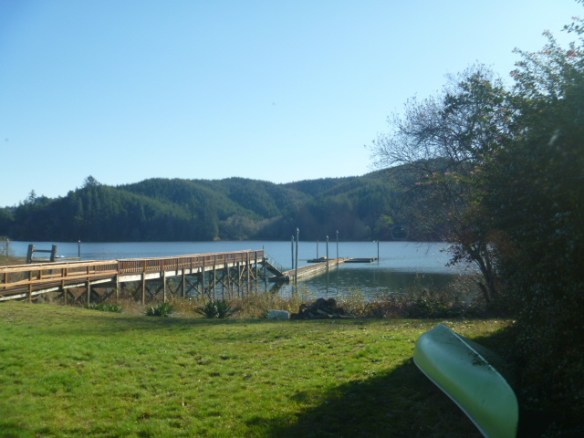
Tday-LakesideLodge

It’s always enjoyable to walk out on the dock afterward and be close to the water as we watched a flock of small ducks that were creating sunshine sparkles in the water as they swam.

Soon we headed back north taking a detour to one of our favorite spots to watch the rolls on the ocean in front of us out over the Dunes.

Tday-Ocean

Behind us from this view stands the family’s favorite lighthouse. The Umpqua River Lighthouse is the one that sends red butterflies out into the night at dark.
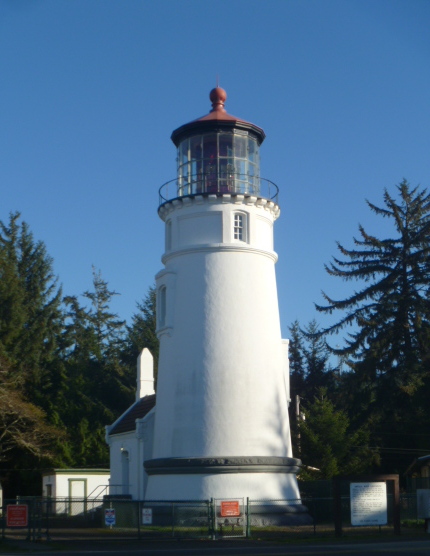
 Tday-UmpquaRiverLighthouse

We then headed down the hill into Winchester Bay and caught this shot of the end of the crabbing dock which extends off into some old pilings.

Tday-CrabbinDockWindyBay

As you can probably tell it was an absolutely beautiful day on the Oregon Coast. One of those days that is a gift, especially this time of year. But all of our family Thanksgivings have been so and we are grateful for them.

The sun was especially brilliant and it’s not a sight we are used to seeing so much of this time of year. Again we were grateful for the sunshine today. Before you see the photo of today’s sunshine we at Umpqua River Haven wish you a very Happy Thanksgiving and hope yours was as pleasant as ours was.
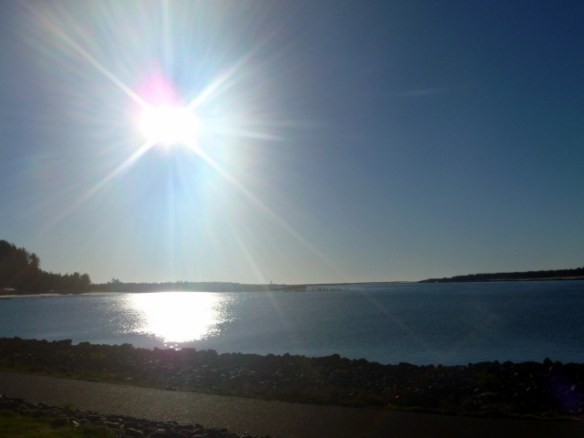
Tday-SunshineWindyBay

Dean Creek Elk Viewing Area

In the 1930s Dean Creek Elk Viewing Area’s native salt marshes were drained and freshwater then irrigated the grasslands here. Local farmers began using the land to graze their cattle. In 1991 the Bureau of Land Management in conjunction with the Oregon Department of Fish and Wildlife took over the management of this unique open area along the Umpqua River.

The O.H. Hinsdale Interpretive Center was immediately built and contains several viewing platforms along with rest room facilities. And what views!

DeanCreekBlog-3There are 440 acres of open pasture, some of it wetlands, visible from the highway. The other 600 acres are forest of conifer and other hardwood trees. Across the highway is the Umpqua River with Reedsport just a couple of miles west.
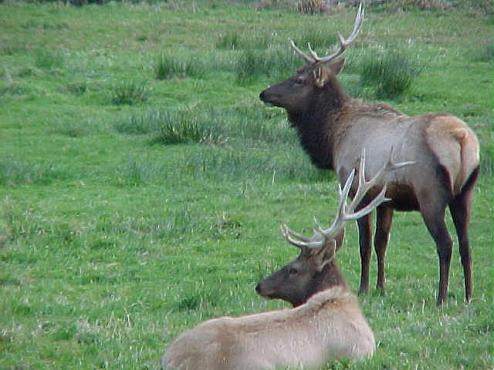
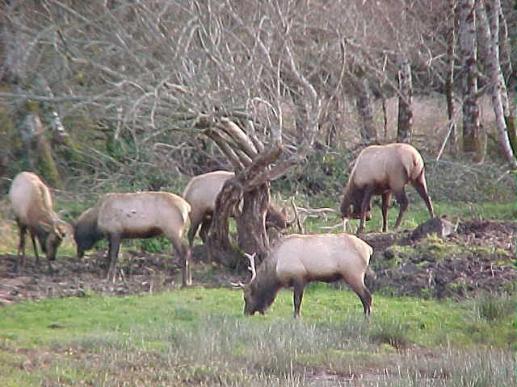
The main attraction here is the herd of 100 Roosevelt Elk that reside protected here year around. Oregon’s mild climate and the abundance of food lend to the elk being here all year long.

They can be seen across the way, up close and sometimes on the roadside. Fences don’t mean much to the largest elk in the world. Elk watchers pull in to the safety of the extended viewing areas but many just park alongside the highway to watch. Some set up cameras and video cams on tri-pods and shoot away oblivious to the highway traffic. DeanCreekBlog-2The Elk have been here since the 1930’s but are not the only wildlife that reside here. They are joined by seasonal flocks of Canadian Geese, beaver, muskrat, coyotes, red-legged frogs and the Great Blue Heron. Migrating ducks stop here on their journeys and resident waterfowl nest during the summer months. An Oregon black bear might wander through now and then, too.
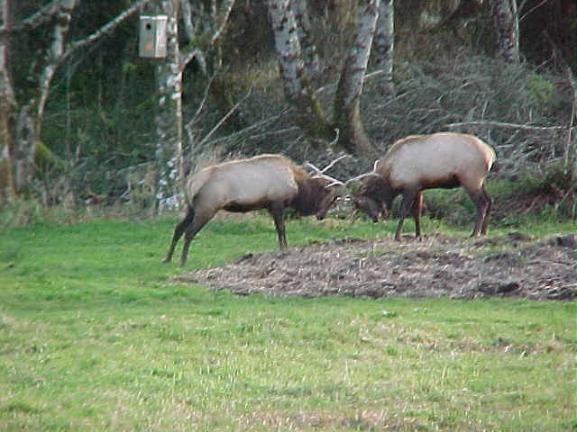
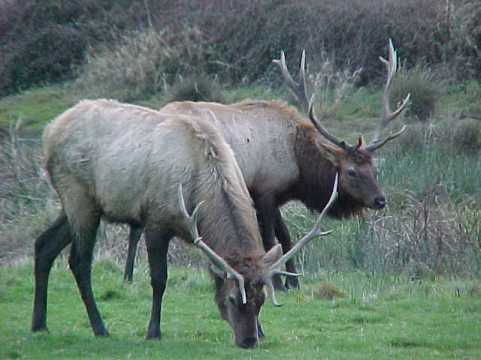
During mating season the male Elk put on many spectacular shows with the sounds of their clashing horns echoing across the valley.

DeanCreekBlog-4

Across the highway during the spring the O.H. Hinsdale Rhododendron Garden bursts forth with multitudes of vibrant ‘Rhody’ colors. Be sure and stop at this day use area to take in all that it has to offer on your travels along the Umpqua River. And stop in about 16 miles east to say ‘hello’ to us here at Umpqua River Haven. Let us know what you think of our beautiful Umpqua River Valley and Oregon Coast. www.umpquahaven.com

Our friend, Mark, took all of these great photos of the Elk.

DeanCreekBlog-1


The Plight of Oregon’s Black Bears

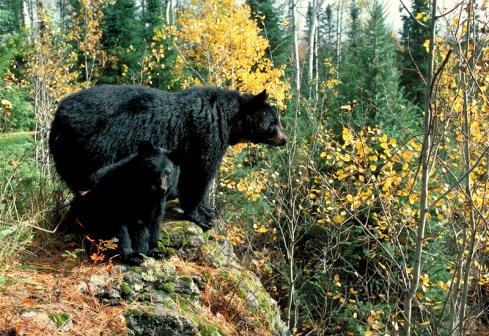
The only bears in Oregon are the smallest bears on the Continent – the black bear. They are normally black with a brown muzzle but they can be a variety of light to dark brown hues and even white. They run 5 to 6 feet in length and up to 30 inches at the shoulder. Females can be 125 to 200 pounds and males 200 to 250 pounds. They don’t mate until they are 3 to 4 years old.

Black bears are usually gentle and can be scared away quickly by loud noises and yelling.  And I do mean quickly. When they are spooked they take off like a rocket streak for the nearest forest shelter. They are not normally aggressive but the male bears can become so with each other during June and July mating season. Also a mother bear when she feels her cub needs protecting can be very aggressive. Do not come between a mama bear and her cub. There has never been a single documented human death caused by a black bear in Oregon. They just don’t want to be around us.

Black bears live in forested areas that are not inhabited by humans. They can occasionally be seen crossing highways between forests or to reach water. If you live near the forest you may see one on occasion just passing through. It is best to stay inside and enjoy the view until the bear has wandered back into the forest. That way the bear won’t be spooked and run in the wrong direction. They are just passing through.

Usually. Unfortunately this year is unusual due to the drought. All of the Western US is starting to recover from the long hot summer. Here in Oregon the rains have begun and are predicted to stick with us. We welcome them. However, our gentle bears are trying to store up for the coming winter hibernation. Due to the drought their normal food supply of nuts, grass, insects and berries – they love Oregon blackberries – is not there in the usual quantities.

Due to the low food supply, black bears are coming out of the forest looking for food and finding garbage cans. This is not good. Bears can become habituated to an easy food supply if they find one but this year is different. They are just hungry. You can help by keeping trash and garbage cans locked up tight in bear-proof containers or put away where a bear cannot get to them.

We love our bears in Oregon and enjoy watching them cross the road or meander up rural driveways on their way back home to the forest on the rare occasion that those sightings happen. We want them to survive. If you live in Oregon, please assist the bears to pass on by.
BlackBearMamaCubFallLeaves

Cape Meares Lighthouse

The Oregon North Coast has one of the most scenic drives anywhere. For nearly 40 miles between Tillamook and Pacific City, the road wends its way in and out and around the 3 Capes Loop. Cape Kiwanda, Cape Lookout and Cape Meares are said to be the sister capes. Heading west out of Tillamook, the road takes you to Cape Meares Loop and meanders, and I really mean meanders, all over the 3 capes. One can take the route either from the north (Cape Meares) or from the south (Cape Lookout). We like to travel from the north and end up in Pacific City at the Pelican Pub & Brewery which is right on the water on Cape Kiwanda.

One Christmas Day we were driving up the coast and traveling the 3 Capes Loop. We were very hungry and came upon the Pelican. We were surprised they were open. They were not only open but they were serving the most wonderful holiday buffet with traditional turkey, dressing and all the trimmings. What a treat!

Whatever time of year you arrive on the 3 Capes, don’t miss the Pelican.

PelicanBrewery

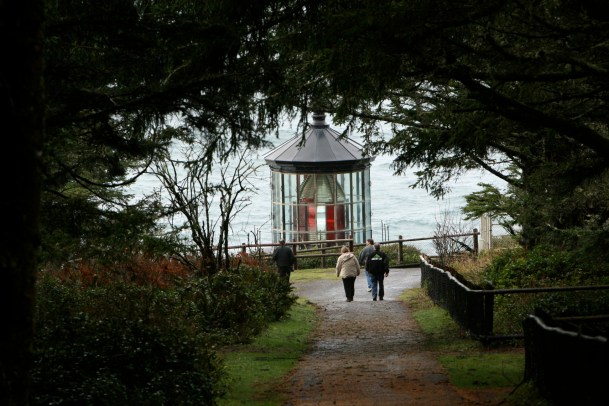
The Pelican is about our last stop on this beautiful drive. Almost the first is the Cape Meares Lighthouse. Not only is the lighthouse in this beautiful coastal place but the area is also a wildlife refuge. There is a parking lot to park in and then a short walk through Oregon’s trees to the top of the light.

CMLH-ParkEntrance

Near the park entrance is the trailhead to the Big Spruce which is Oregon’s largest Sitka Spruce. There is a lot to see and do here. Check it out before you go. http://www.capemeareslighthouse.org

As with all lighthouses, this one has a rich history. It is named after Captain John Meares who was the first to sail into Tillamook Bay. The lighthouse was built in 1889 with bricks made on site and covered with iron plates. At 38 feet it is the shortest lighthouse in Oregon.

The original light consisted of a 5 wick oil lamp with a reflector. It was turned by a 200 pound lead weight wound with a mechanism similar to a grandfather clock. The lens is a Fresnel lens made in Paris and was shipped around Cape Horn before coming up the west coast to Cape Meares. It was then taken 217 feet up the cliff by a wooden crane built from native timbers.

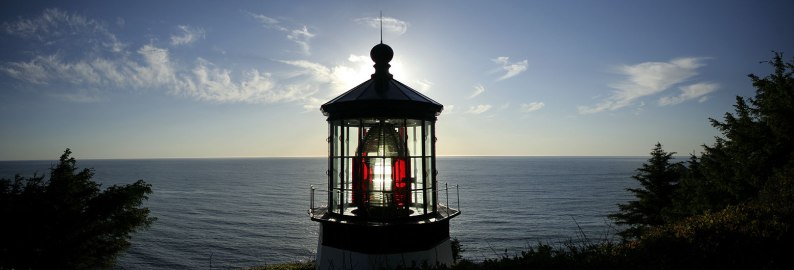
As with all lighthouses this one has a signature flash consisting of  30 seconds of fixed white light from its primary lens followed by 5 seconds of red flash from the bull’s-eye lens once a minute. The light can be seen 21 miles out to sea.

CMLH-Night

The oil lamp has been replaced a couple of times eventually becoming the automated light it is today. The lighthouse was decommissioned in 1963 and was heavily vandalized during the several years it was vacant. Oregon Parks and Recreation Department took it over and reopened the lighthouse for tours.

There is much more history especially having to do with the theft of the four bull’s-eyes and their piecemeal return nearly 20 years later starting with a drug raid in Portland. But…..it’s time to get to the ghost story that every lighthouse has. Cape Meares Lighthouse doesn’t seem to have a resident ghost but there is ghostly history all around it.

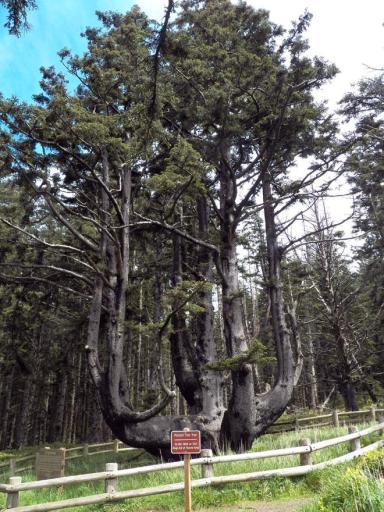
The Octopus Tree that resides in the park was utilized by Native Americans in the area as a burial place. They caused the odd shaped tree much in the same way a Bonsai is created and would place the deceased in their canoes and put them in the candelabra shaped tree. Natives have lived here for 3,000 years and it is estimated this tree is over 2,000 years old.

OctpusTree

Bayocean is one of Oregon’s most famous ghost towns and sits just below Cape Meares. It is hidden and unknown to most tourists. Built in 1912 this small hamlet on the coast is described as having been a “glittering resort town.” It lasted only 10 years as such and then died with a more complete death coming during the Great Depression. As tidal conditions changed most of this former coast resort town was later destroyed.
Bayocean

Who knows what ghosts may be lurking about Cape Meares Lighthouse with this rich, ghostly history?! Come visit us www.umpquahaven.com and travel north along the beautiful Oregon Coast to find out!

CMLHFromEntrance